
Public Policy
Regulation, trade, government and security, read for what they do to the businesses that have to live with them.
Public Policy is the vertical for the decisions made in capitals that land on companies. Regulation, trade and tariffs, elections and government, antitrust, and healthcare policy are the beats, and geopolitics and security appear when they change what a business can plan for. Three stories each weekday at 11, in our own words, linked to the publisher. We choose for the reader who has to model a policy risk rather than argue about it: the general counsel, the head of government affairs, the founder selling into a market whose rules are moving. Sources range from newspapers to think tanks and academic institutes, and we say which is which. The editor’s note beneath the day’s lead explains the choice and what to watch as the policy moves from proposal to enforcement.
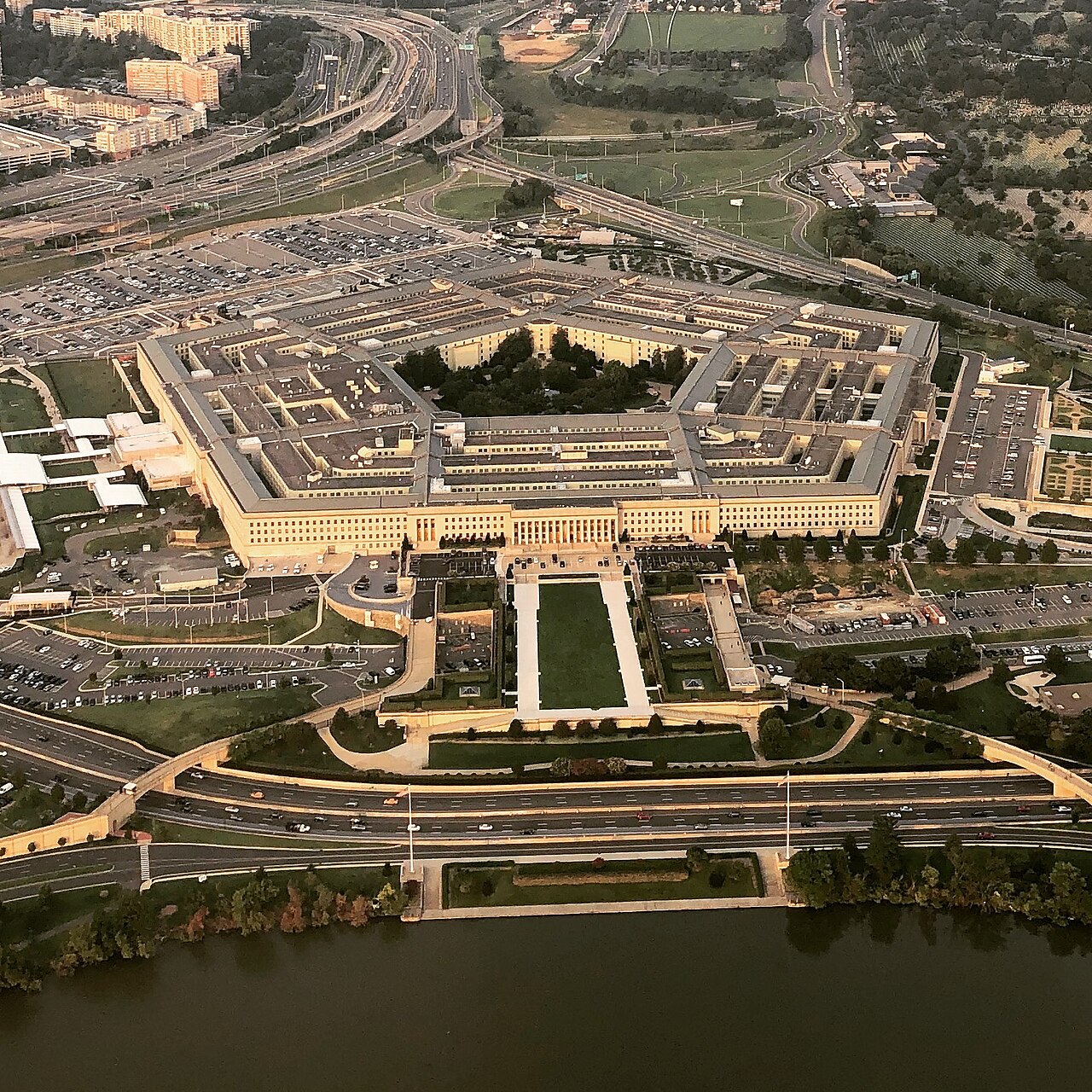
Picture credit: By Touch Of Light - Own work, CC BY-SA 4.0, https://commons.wikimedia.org/w/index.php?curid=158822157
Every story we have kept in Public Policy, newest first. Headlines link to the publisher; the tags below narrow the list.
Trump wants an ‘AI Force.’ What would that actually look like?
Trump announced plans for an AI Force modeled on Space Force, though officials and experts say the proposal lacks detail on mission, legal authority, budget, and where it would sit in government.
Pentagon Auditors Say the Iran War Has Cost $33 Billion. The Real Price Tag Is Far Higher.
A Pentagon Inspector General audit put direct costs of the Iran war at 33.4 billion dollars, while Reason argues fuel-price inflation and unrepaired infrastructure make the true toll far larger.
Editor's noteAn inspector general's number is the floor, not the total, and this piece is useful precisely because it says so. Thirty-three billion covers direct costs only; fuel-price effects and unrepaired infrastructure sit outside the audit's scope, which is where the argument about the real price now runs.
Germany: Russia’s Enemy No. 1
Russia has escalated hybrid-warfare attacks against Germany, including a drone incident at Leipzig airport and an explosive attack near a Rohde and Schwarz facility, as Berlin backs Ukraine.
Iran’s Covert Weapons Supply Chain Runs Through Canada and China — Fueled by Trade-Based Money Laundering
A covert network moves sensitive American technology to Iran through Chinese front companies and Canadian intermediaries, using trade-based money laundering to fund weapons procurement for the Revolutionary Guard Corps.
The Pentagon’s push for a clean audit is reshaping how it manages money and systems
The Pentagon’s drive to achieve a clean audit is forcing broad changes to financial management, including system consolidation, standardized data practices, and enterprise-wide process reforms aimed at improving accountability and audit readiness.
Editor's noteWe chose this as the lead story because it highlights a challenge that sits at the heart of effective governance: accountability. The Pentagon’s audit journey is not just about financial compliance but about modernizing systems, improving data quality, and strengthening institutional oversight. It offers a compelling example of how organizational reform often begins with transparency.
Dangerous Partners: The Russia-China Military Embrace
A CEPA analysis warns Russia and China are deepening military space cooperation through missile-warning data sharing and joint exercises, edging toward coordinated threats to US space systems.
Editor's noteTwo militaries sharing missile-warning data is a specific, verifiable act, not an alignment of rhetoric. That is why this leads: the analysis argues the cooperation is deepening in orbit without any treaty to point at, which makes it harder to deter and easier to underestimate.
Defense Dept opens use of three major AI tools for employees
The Defense Department rolled out government versions of ChatGPT, Grok and Gemini for staff, permitting unclassified administrative and policy document review plus operational tasks like market research and supply-chain planning.
America Doesn’t Need More Nuclear Weapons
America’s nuclear stockpile would increase costs, escalation risks, and arms-race pressures without improving deterrence. Instead, Washington should modernize existing strategic capabilities and strengthen conventional forces to counter China and Russia effectively.
Editor's noteA Foreign Affairs argument against expanding the arsenal, chosen because it separates deterrence from stockpile size, a distinction the budget debate keeps blurring. The claim that conventional forces buy more security per dollar deserves testing rather than agreement. Watch where the modernisation money goes in the next authorisation.
Russia’s Nuclear Weapons: Sanctified by God?
The Russian Orthodox Church’s support for Russia’s nuclear arsenal, arguing that religious endorsement of weapons of mass destruction is unusual among major faith traditions and reinforces state nuclear messaging.
Editor's noteA church blessing nuclear weapons is unusual even by the standards of churches and weapons, and Alexander Motyl writes it plainly where most analysis is either too careful or too loud. It led Public Policy because the religious layer is part of Russia’s signalling, not colour. If you model Russia risk, the arsenal’s sanctification belongs in the model.
Buzzkill: How to defend Europe against drones
An ECFR report warns Europe faces escalating civilian and military drone threats, arguing that fragmented national responses leave vulnerabilities and calling for coordinated detection, data-sharing, and counter-drone defenses across EU and NATO members.
Editor's noteDrone incursions have been reported one airport at a time, which is exactly the problem this report names. Fragmented national responses leave the gaps, and detection and data-sharing only work if they cross borders, so the fix is institutional rather than technical, and slower for it.